A car rental deposit is one of the first things that makes foreign travelers nervous.
The daily price may look clear. The car may look right. The route to Issyk-Kul or the hotel pickup in Bishkek may already be planned. Then a deposit appears in the conditions, and suddenly the rental feels less simple.
That reaction is understandable. European travelers are used to seeing confusing words around car hire: deposit, excess, deductible, CDW, full cover, pre-authorization, card block, fuel policy, mileage limit, and damage report. In a new country, those words feel even heavier.
The useful answer is not "deposits are bad" or "do not worry." The useful answer is this: a rental deposit is normal, but unclear deposit rules are not.
Carpal is not affiliated with Rentalcars, DiscoverCars, Expedia, Skyscanner, or any insurer mentioned by travelers online. This article uses aggregator-style terms because tourists already use them when comparing car hire in Kyrgyzstan.
What a car rental deposit is
A deposit is a refundable security amount held during the rental. It is not supposed to be a hidden rental fee.
If the car is returned on time, with the agreed fuel level, without new damage, fines, missing items, or contract violations, the deposit should be returned according to the rental conditions.
The deposit exists because the owner or rental provider carries real risk while the car is away: parking fines, speeding fines, late return, lost keys, cleaning, smoking, unpaid fuel, route violations, and damage that may be found at handover.
In Kyrgyzstan, that risk depends heavily on the route. A short drive around Bishkek is not the same as a multi-day road trip to Issyk-Kul, Son-Kul, remote valleys, or mountain passes.
Deposit, excess, and insurance are not the same thing
This is where many travelers get confused.
The deposit is the amount temporarily held or paid during the rental. It can be a card pre-authorization, card payment, cash deposit, or another local method depending on the specific offer.
The excess is the amount you may remain responsible for if there is an insured damage event. In many international rental systems, the excess can be the maximum part of a claim paid by the renter, assuming the renter followed the contract.
Insurance is the coverage itself: what is included, what is excluded, and what conditions must be followed. Tyres, glass, underbody, roof, keys, off-road use, water crossings, and prohibited routes may be treated differently from normal body damage.
Aggregator terms usually tell travelers to check the rental conditions and payment policy before booking. Rentalcars says rental-specific requirements can include deposit size, paperwork, and payment cards. DiscoverCars advises checking the payment policy when a traveler does not have a credit card: Rentalcars terms, DiscoverCars.
The practical point is simple: do not compare only the daily price. Compare deposit, excess, insurance, and route rules together.
Why deposits can feel different in Kyrgyzstan
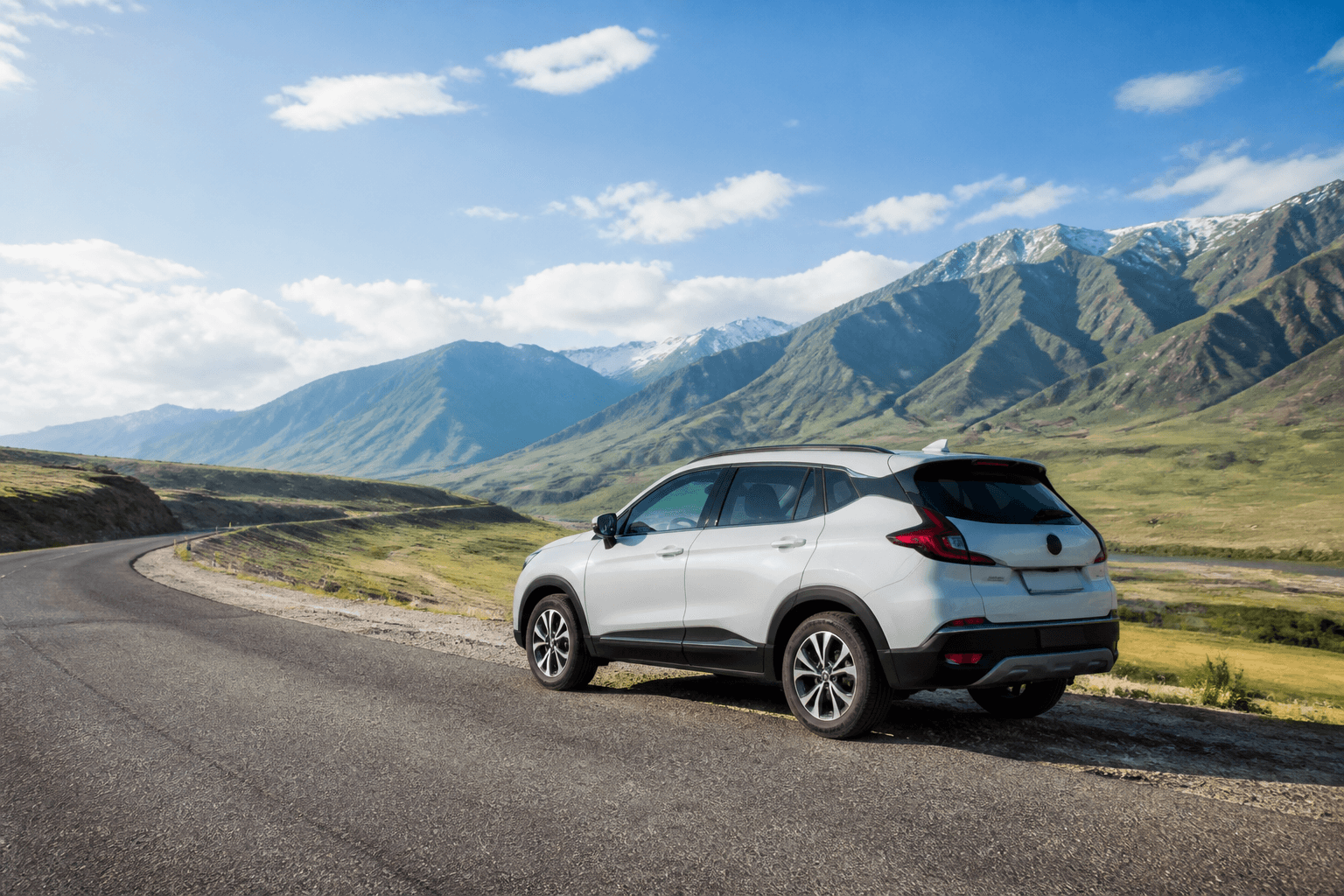
Kyrgyzstan is a road-trip country. Many visitors do not rent a car only to move between a hotel and a shopping mall. They want freedom: airport pickup, Bishkek, Issyk-Kul, Karakol, canyons, valleys, lakes, guest houses, and mountain roads.
That is exactly why the vehicle condition and route agreement matter.
A sedan can be fine for Bishkek and paved roads. A crossover can make more sense for luggage, family travel, or poor surfaces. A true mountain route may require clearance, tyres, weather checks, and explicit approval from the provider.
If a renter takes a car on a route that was not allowed, the deposit discussion becomes harder. The cheapest deposit is the one you protect before the trip starts.
How deposits are usually paid or blocked
Do not assume one universal method.
In international rentals, a deposit is often blocked on the main driver's credit card. Some suppliers accept debit cards. Some require a physical card in the driver's name. Some local providers may accept cash deposits or local transfer methods.
For Kyrgyzstan, the safest wording is: confirm the method for your specific car before booking.
Ask these questions:
- how much is the deposit;
- in which currency it is held;
- whether it is blocked or actually charged;
- whether a debit card is accepted;
- whether cash is accepted;
- how fast the deposit is returned;
- what can be deducted from it.
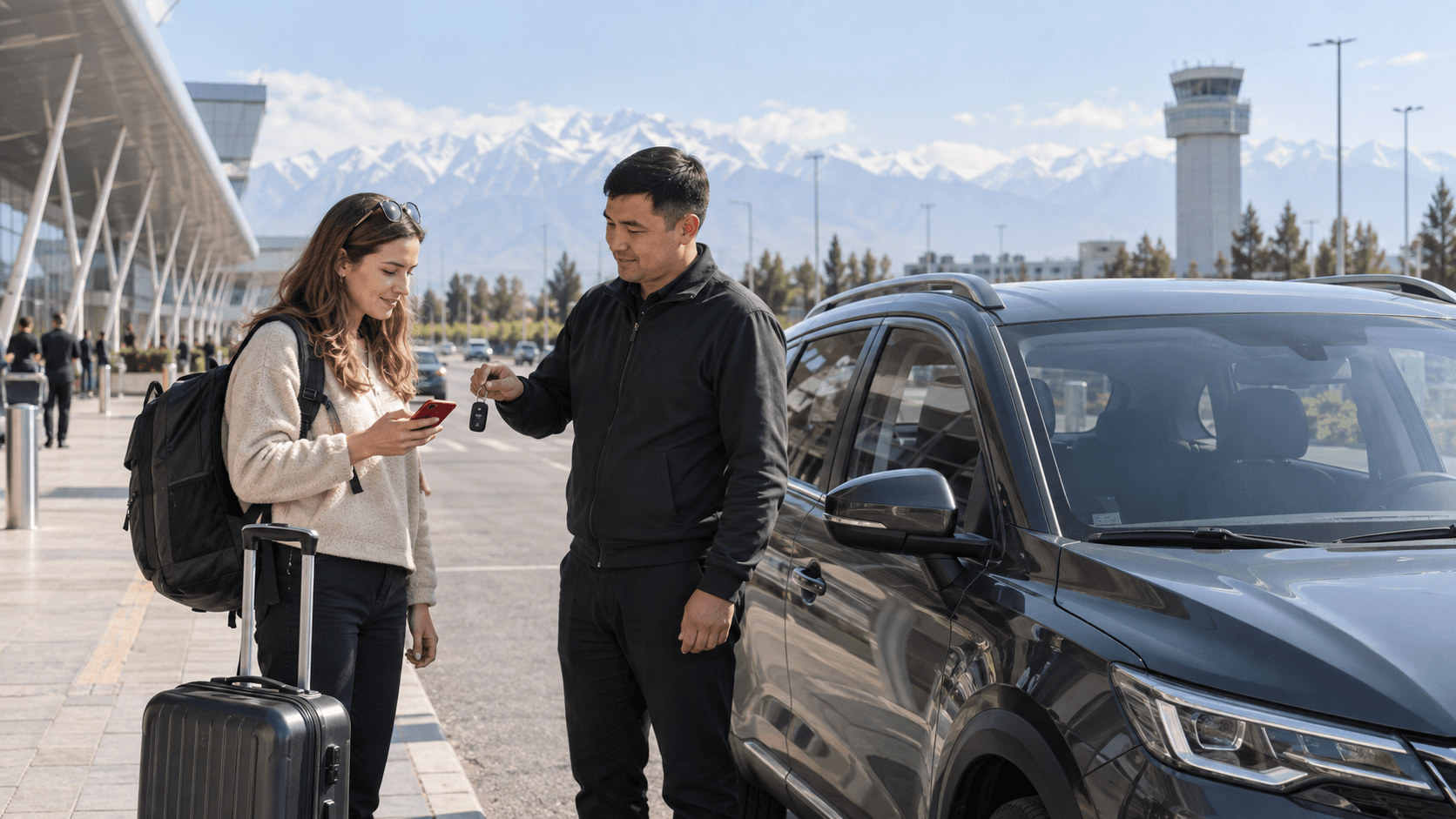
If you are arriving from Europe with only a debit card, do not wait until pickup to ask. Payment policy is part of the booking decision, not a detail for the curbside handover.
How not to lose your deposit
The goal is not to argue after the trip. The goal is to make the return boring.
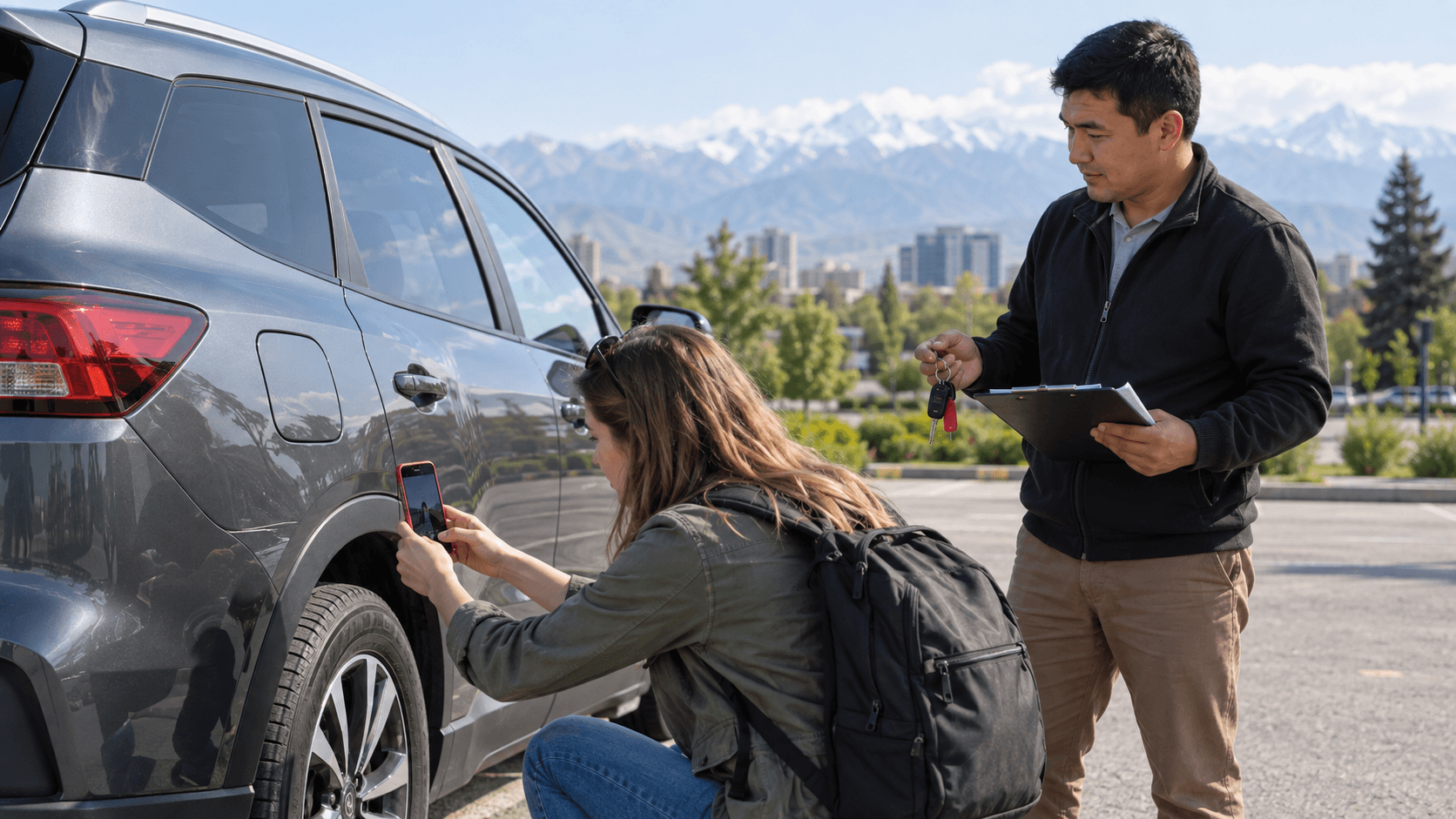
Before driving away, inspect the car slowly. Photograph all sides of the body, bumpers, mirrors, windshield, wheels, tyres, interior, fuel level, mileage, and any existing scratches. A 30-second walkaround video is also useful.
Check the documents and equipment. Make sure the registration, rental agreement, emergency contact, spare tyre or repair kit, and key condition are clear.
Agree on the route in writing. If you plan to drive to Issyk-Kul, Karakol, Son-Kul, ski areas, valleys, or unpaved roads, say it before pickup. Do not rely on "it should be fine" if the contract says otherwise.
Return the car on time. Late return is one of the easiest ways to create an avoidable deduction.
Follow the fuel and cleaning policy. If the car should be returned with the same fuel level, do that. If the car is returned with unusual dirt after a mountain route, cleaning may become a deposit issue.
Keep the handover calm. Repeat the same photo/video process at return and ask for written confirmation that the car was returned.
What can be deducted
Every provider has its own terms, but common deduction reasons are predictable:
- new scratches, dents, glass damage, or tyre damage;
- lost keys or documents;
- traffic and parking fines;
- late return;
- missing fuel;
- strong cleaning, smoking, or pet-related cleaning;
- mileage over the agreed limit;
- driving on a prohibited route;
- towing or recovery after misuse.
This is why the route matters as much as the price.
Documents also matter
Deposit problems are not only about money. They can start with documents.
Foreign drivers should check licence and International Driving Permit requirements before arrival. The U.S. Department of State notes that International Driving Permits are recognized in the Kyrgyz Republic. Canada travel advice recommends carrying an International Driving Permit. GOV.UK gives separate guidance for UK licence holders and also tells travelers hiring cars abroad to check whether the rental company requires an IDP: travel.state.gov, travel.gc.ca, gov.uk driving abroad.
If the driver, licence, payment card, and rental agreement do not match, pickup can become complicated before the trip even begins.
Where Carpal fits
Carpal's job is to make local rental conditions easier to understand before the handover: car details, photos, owner context, pickup expectations, deposit rules, support, and route limitations.
If something is unclear, ask before booking. A good rental experience is not the one with the smallest visible number. It is the one where the price, deposit, insurance, documents, and route all make sense together.
Bottom line
A car rental deposit in Kyrgyzstan is normal. Losing it should not be normal.
You protect yourself by asking the right questions before payment, documenting the car at pickup, agreeing on the route, and returning the car according to the conditions.
The deposit is not the enemy. Unclear terms are.